197 nervous speakers named filler words their main challenge. The bigger clue came later
197 of 1,851 nervous speakers picked too many filler words as their biggest challenge. The louder finding comes later.
 By Maria Lee·

You know the moment in a presentation when you can hear yourself saying um, like or you know, and then you start listening to the filler word instead of the point you were making. In AmberWillo onboarding answers, 197 of 1,851 nervous speakers, or 11%, picked using too many filler words as their single biggest speaking challenge.
That puts filler words below going blank, speaking too fast and not sounding confident. But it does not make them feel small. Filler words are public. They happen out loud, in real time, while people are looking at you. The more useful finding is not the 11%. It is a smaller number we will get to near the end.
- Mind goes blank or forget what to say38%
- Speak too fast when nervous21%
- Don't sound confident18%
- Too many filler words11%
- Sound monotone or flat9%
- Don't know what to do with hands or face3%
Share of 1,851 AmberWillo users who picked each answer as their single biggest challenge, Dec. 2025 to Oct. 2026.
Filler words are not the biggest problem, but they are easy to hear
A blank can be hidden for a second. A shaky thought can be covered by a slide. A filler word lands in the room. That is why a problem picked by 11% of nervous speakers can feel much larger during a work presentation.
The ranking also matters because it changes the usual advice. If you assume filler words are the main problem for most nervous speakers, the fix sounds simple: stop saying them. But in this data, more people were worried about losing the words entirely, rushing, or not sounding confident. For many speakers, the filler word may be the part other people hear after something else has already gone wrong internally.
Presentations make that sound feel even louder. You are often standing or sharing a screen. People are quiet on purpose. They may not be judging every syllable, but the room gives you very little back. In that silence, one repeated word can feel like a spotlight.
- Beginner47%
- Intermediate47%
- Advanced6%
Self-described skill level among 1,851 AmberWillo users. This is the full nervous-speaker sample, not a filler-word subgroup.
It is not just a beginner problem
The people in this sample did not all describe themselves as brand new speakers. Almost the same share chose beginner and intermediate: 47% each. Another 6% chose advanced. The data does not say which skill group uses more filler words, because this pull does not cross those answers. It does show that people seeking help with speaking nerves are not only starting from zero.
That matters for professionals who feel confused by their own filler words. You may know your topic. You may have given versions of the presentation before. You may sound clear in normal conversation. Then the formal moment arrives, the pace changes, and your speech starts filling the space before your thought has fully landed.
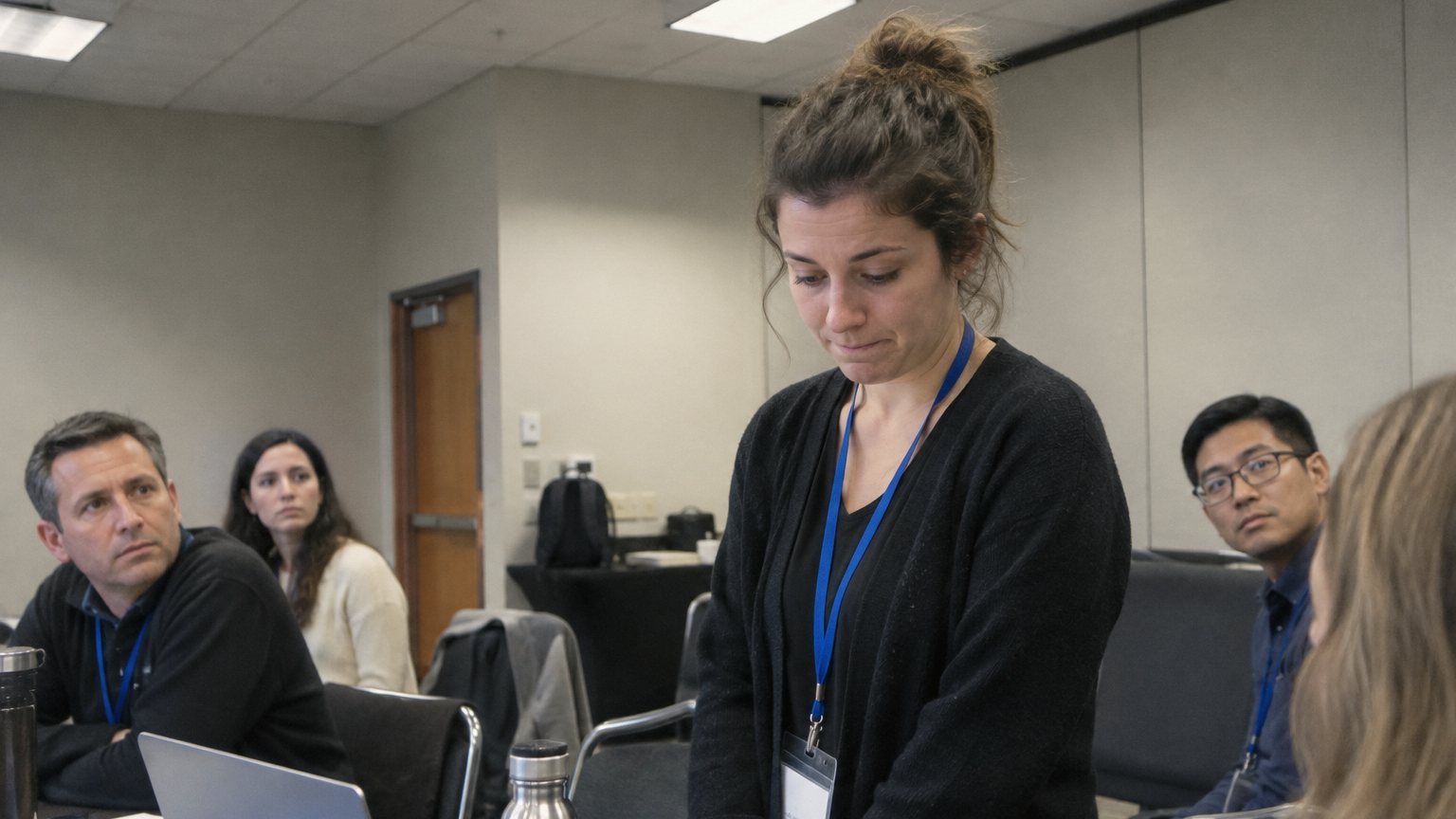
That is why filler words can bother professionals so much. You may already know your topic. You may have the slide ready. You may even sound clear for most of the meeting. Then a question lands, the room waits, and the gap between thoughts gets filled with sound.
That brings us back to the smaller number. If filler words are what you hear in the moment, the question is what kind of speaking habit exists before that moment arrives.
The number to check before your next presentation
Only 5% said they practice daily. That is 96 people out of 1,851 nervous speakers in the onboarding answers.
This does not prove that daily practice removes filler words. The onboarding data cannot show cause and effect. It does show that the daily habit is rare in the same group worried about speaking under pressure. For a presentation, that matters because filler words are not usually fixed by reading notes silently. They show up in the moving parts: starting a sentence, finding the next phrase, and staying with the thought while people wait.
A rare habit is not the same as a required habit. You do not have to rehearse for an hour every day to improve a presentation. But the number is a useful check on the way many people prepare. If most of the work happens silently, the first live version of the sentence may happen in front of the room.
What this means for you
If filler words take over when you present, do not treat them as a character flaw. Treat them as a timing signal. Your mouth is buying time while your next thought catches up.
Practice the transition, not the whole talk. Pick one slide and speak the bridge into the next point out loud.
Use a silent pause on purpose. A half-second pause can feel huge to you and normal to everyone else.
Start the next sentence with a simple anchor. Try “The point is,” “What matters here is,” or “The next step is.”
Record one short round. You do not need a full rehearsal. Thirty seconds is enough to hear where the filler words appear.
Sources
- AmberWillo onboarding answers, n = 1,851 (Dec. 2025 to Oct. 2026), anonymized and aggregated