This is how many U.S. workers asked for higher pay when they were hired
The offer is on the table, and one salary sentence can suddenly feel risky. A national worker benchmark shows how many people actually said it.
 By Maria Lee·

In 2023, 30% of U.S. non-self-employed workers asked for higher pay when hired; men were 32%, women 28%. Pew Research Center reported those figures in an April 2023 analysis. But the harder part for many professionals is the live moment: saying the salary sentence clearly when the offer is already on the table.
Most workers did not make the starting-salary ask
Pew framed the 30% figure as a minority behavior among U.S. workers who are not self-employed. The benchmark covers the last time workers were hired for a job, not every raise request, annual review or off-cycle adjustment.
- All U.S. non-self-employed workers30%
- Men32%
- Women28%
Pew Research Center reported that 30% of U.S. workers who are not self-employed asked for higher pay than initially offered the last time they were hired; men were 32% and women were 28%.
The gender difference Pew reported was small, at 32% for men and 28% for women. The practical reading is still stark: in each group, most workers did not ask for higher pay than the first offer.
A salary request has to be said aloud
A pay negotiation is often treated like a money decision, but the pressure arrives through speech. You have to say a number, pause, and listen. For people who tense up when watched or evaluated, that can feel close to public speaking apprehension, even when the audience is only one recruiter or manager.
Pew's 2023 finding does not say why a worker stayed quiet. It only says whether the worker asked. Still, the ask itself is a communication act. The difference between 30% and the workers who did not ask can come down to one spoken sentence.
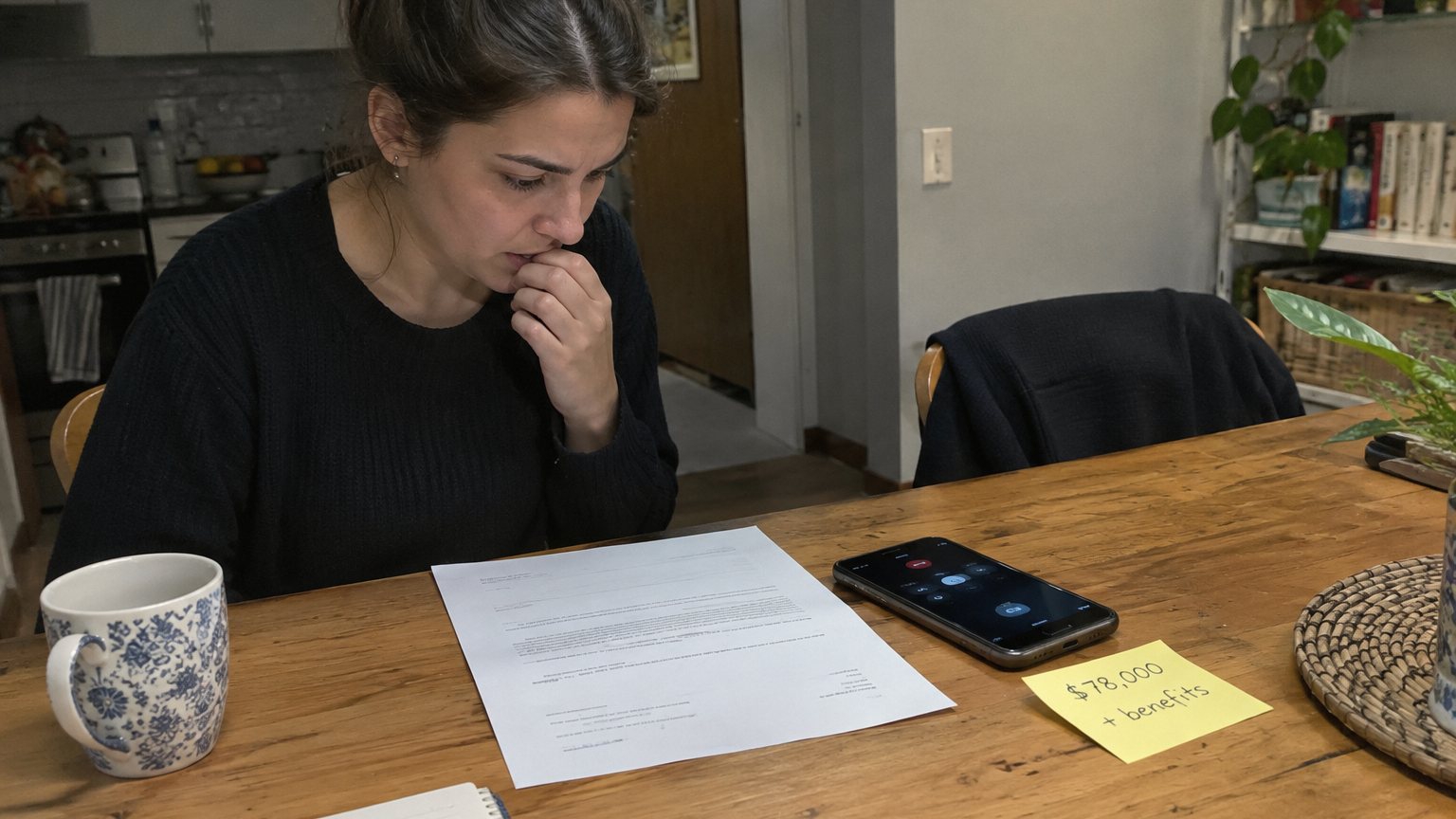
The workers who asked often got a different answer
Among workers who did ask for higher pay, Pew reported 28% were given the pay they asked for. Another 38% were given more than initially offered but less than they asked for. A further 35% were only given the first offer.
Those 28%, 38% and 35% figures describe outcomes only among people who asked. They do not prove that asking will change an offer. They do show the range of replies workers reported after making the ask.
What changed in the 2016 negotiation experiment?
A 2016 PLoS ONE experiment gives the nerves part of the story. Researchers randomly assigned 97 male and female participants to receive either instructions to appraise their anxiety as beneficial to the negotiation or no specific instructions on how to appraise the situation.
The study reported that cortisol increases were positively related to negotiation performance for participants told to view anxiety as beneficial. In the control condition, where participants received no appraisal instructions, cortisol increases were negatively related to negotiation performance.
Before the call, separate nerves from the sentence
The 2016 experiment does not say nervousness is pleasant. It does not give a script. It tested an appraisal instruction in a group of 97 participants and found a different relationship between cortisol increases and negotiation performance depending on that instruction.
For a worker facing a 2023-style hiring offer, the useful distinction is simple: a racing body and a clear sentence are not the same thing. The Pew benchmark counts whether the worker asked. The PLoS ONE experiment focuses on how anxiety was interpreted during negotiation.
Every pay-talk result Pew reported
Pew's public figures give 3 useful benchmarks for the decision to ask and 3 benchmarks for what happened after the ask. The table keeps those groups separate, because the outcome figures apply only to workers who asked for higher pay.
| Group or result | Share |
|---|---|
| U.S. non-self-employed workers who asked for higher pay when hired | 30% |
| Men who asked for higher pay when hired | 32% |
| Women who asked for higher pay when hired | 28% |
| Asked and were given the pay they asked for | 28% |
| Asked and were given more than originally offered but less than they asked for | 38% |
| Asked and were only given what was first offered | 35% |
Pew Research Center figures on asking for higher pay when hired
What this means for you
If you feel tense before a pay conversation, the Pew benchmark can reset your self-check. Asking for more at hiring was a minority behavior, at 30%. Feeling friction before the sentence does not make you unusual.
Before the call, write one plain line you can say without rushing: the role, the value you see, and the pay you want to discuss. If your body spikes, label the energy as preparation for a negotiation, then say the sentence slowly enough that the other person can answer it.
Sources