Why your final interview can feel like a threat: a film puts odds on it
In a final-round group interview, your voice has to sound calm while every answer is compared with the people beside you.
 By Maria Lee·
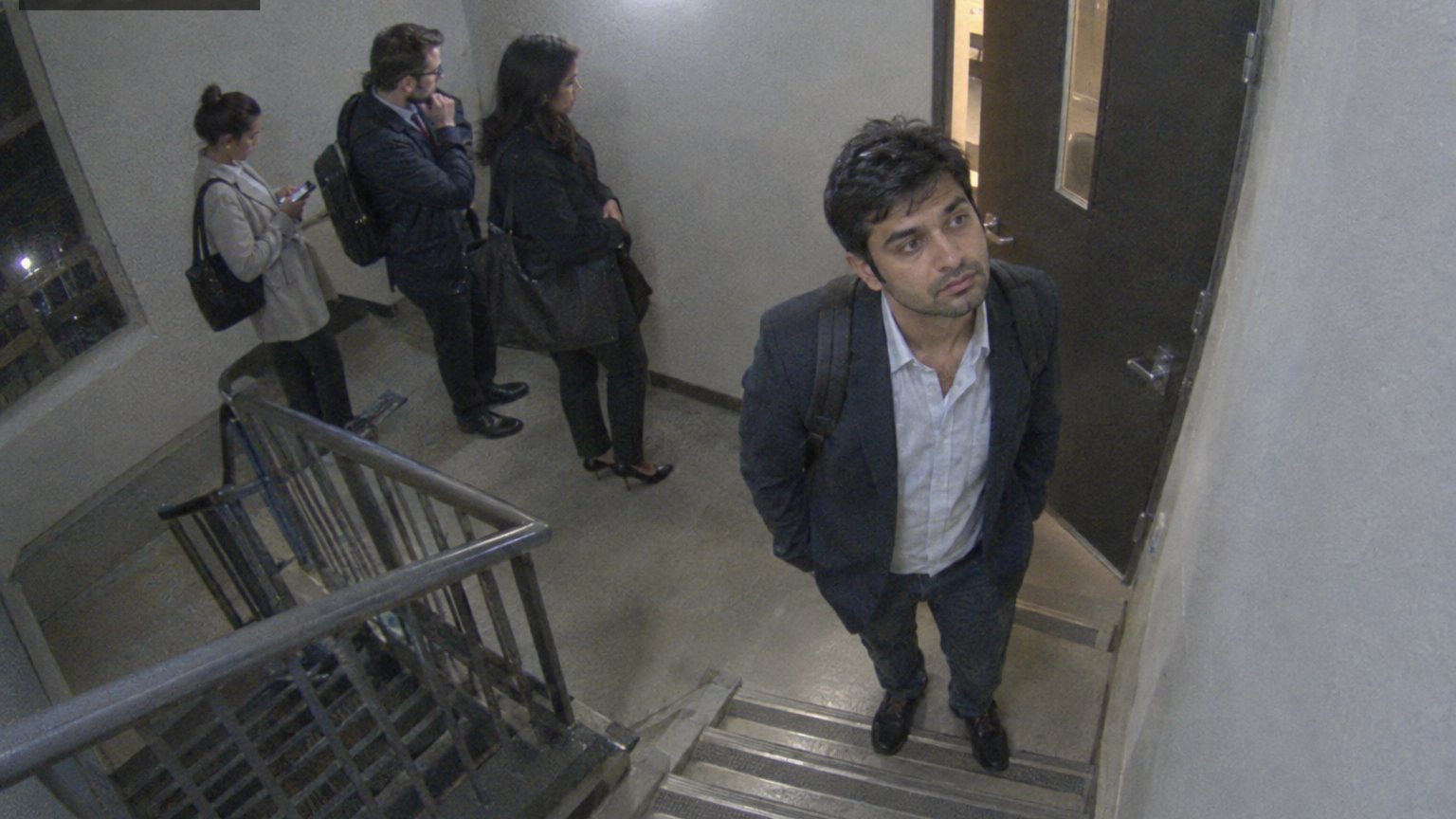
In 2026, 6 final-round applicants beat 5,000-to-1 odds before learning only 1 will be hired. Seoul Economic Daily says that is the setup of the thriller Final Interview. But the nerve point is familiar outside the movie: you have to speak calmly while the people beside you become the comparison.
The brutal job market is part of the setup
The Oct. 29, 2026 review places the story after the COVID-19 pandemic, amid what it calls a brutal job market. The 6 applicants are not walking into a casual screening. They have already cleared 5,000-to-1 odds before the interview room starts working on them.
That opening number changes the temperature of the scene. A finalist can tell themselves to breathe, smile and sound confident. The room still carries the message that almost everyone else was filtered out before these 6 reached the final interview.
Your answer lands beside everyone else’s
Seoul Economic Daily says the 6 applicants prepare for a group discussion while they wait for interview day. That format makes the speaking pressure public. Your answer is not heard in isolation. It lands next to another answer, another pause and another attempt to sound ready.
For anyone who goes blank when watched, the group setup can feel sharper than a private interview. People often describe the social anxiety freeze response as the moment words stall while attention narrows. In the film’s setup, every stalled sentence has witnesses.
The waiting makes the room feel smaller
The review says the applicants are “hopelessly waiting for the interview day” before they learn the final rule. Waiting is part of the pressure. It gives the 6 finalists time to rehearse answers, imagine the room and picture themselves passing as a group.
That is a different strain from a quick phone screen. By the time the 6 enter the final room, the discussion has already lived in their heads. The voice has to do 2 jobs at once: sound cooperative and protect a chance that has already taken extreme odds to reach.
Six finalists face 1 hire in the room
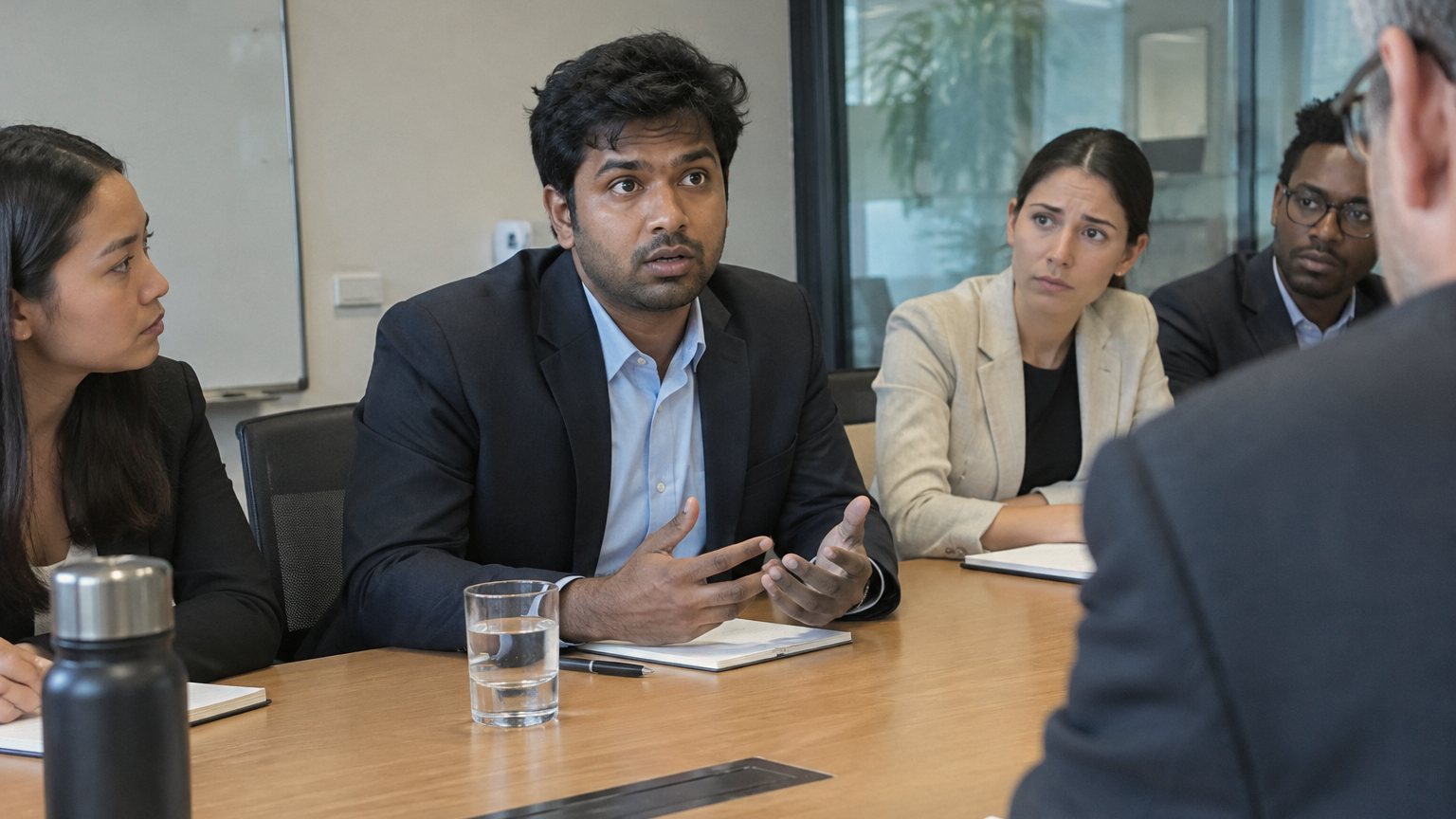
The review says the applicants prepare for a group discussion, only to learn on interview day that just 1 candidate will be hired. The shift is the whole threat. A format that sounded collaborative becomes a contest while the candidates are already inside it.
Take the scene as the review describes it. You arrive as 1 of 6 finalists after 5,000-to-1 odds. You prepared to discuss, listen and build with the group. Then the room says there is 1 seat. A cooperative answer now has to carry self-advocacy too.
Why does cooperation flip into rivalry?
Seoul Economic Daily says the 6 applicants had “banded together to pass as a group.” That detail is the social turn. They are not simply strangers in neighboring chairs. They had treated the process as something they could survive together.
Then, the review says, they “instantly become rivals” who must push one another out. In a real interview, no one may say it that bluntly. The feeling can still arrive when every polished answer from someone else seems to shrink the space for yours.
The film’s review frame also explains why the threat can feel social, not only professional. The danger in the room is comparison. You are still expected to speak with poise, but the people who might make you look better as a group can also make your answer look weaker.
Every pressure point named in the review
The article calls Final Interview a locked-room thriller. It also says the interview room turns into a job-hunting version of “Squid Game.” Those are review frames, not hiring statistics, but they explain why the scene reads as more than ordinary career disappointment.
| Detail | What the review says | What it does to the speaking moment |
|---|---|---|
| Finalists | 6 applicants reach the final interview. | You speak beside people who cleared the same filter. |
| Odds | They beat 5,000-to-1 odds to get there. | The room feels high-stakes before anyone answers. |
| Job market | The story is set after the COVID-19 pandemic amid a brutal job market. | Losing the chance can feel bigger than a normal rejection. |
| Format | They prepare for a group discussion. | Your response is public inside the candidate group. |
| Hiring rule | Just 1 candidate will be hired. | Every answer is heard against rival answers. |
| Prior alliance | The 6 had banded together to pass as a group. | Cooperation flips into competition in the same room. |
| Review frame | The room becomes a job-hunting version of “Squid Game.” | The review frames the interview as elimination, not routine evaluation. |
The final-interview pressure points described in Seoul Economic Daily’s review
What this means for you
If a final interview feels threatening, you may be reacting to comparison as much as rejection. A group format asks you to listen, think, answer and stay composed while other qualified people are doing the same thing beside you.
Before a final round, prepare a cooperative line and a self-advocacy line. The cooperative line helps you build on the group. The self-advocacy line makes your value clear. If your mind blanks, repeat the question in plain words and answer the smallest part first.
Sources