Feel behind on speaking at work? See how many people call themselves advanced
Before your next 30-second update, interview answer or review conversation, the real comparison may be lower than the one in your head.
 By Maria Lee·

You know the thought that can arrive right before you speak at work: I should be better at this by now. The meeting moves to your update, the interviewer waits, or your manager asks you to explain a result, and suddenly you are comparing yourself with someone polished and unshakable. In AmberWillo onboarding answers, 55% of nervous speakers chose work presentations, job interviews, or sales and pitches as their main pressure point.
That is why the level question matters. If you feel behind, you may assume most people trying to improve already see themselves near the top. We will answer how many actually call themselves advanced near the end. First, look at where that comparison tends to show up.
- Work presentations39%
- Social situations20%
- Job interviews12%
- Other11%
- School or academic9%
- Video content5%
- Sales or pitches5%
Share of 1,850 AmberWillo onboarding answers. Percentages are rounded.
The work moments are where the comparison gets sharp
Work presentations were the largest single situation, named by 39% of nervous speakers. Job interviews accounted for 12%, and sales or pitches for 5%. Those are all moments where your speech can be treated as evidence of competence, not just communication.
That changes the feeling of a normal pause. In a casual conversation, losing your wording can be annoying. In a review, a hiring conversation or a client update, the same pause can feel like proof that you are not operating at the level people expect.
The problem people name is often a moment, not a level
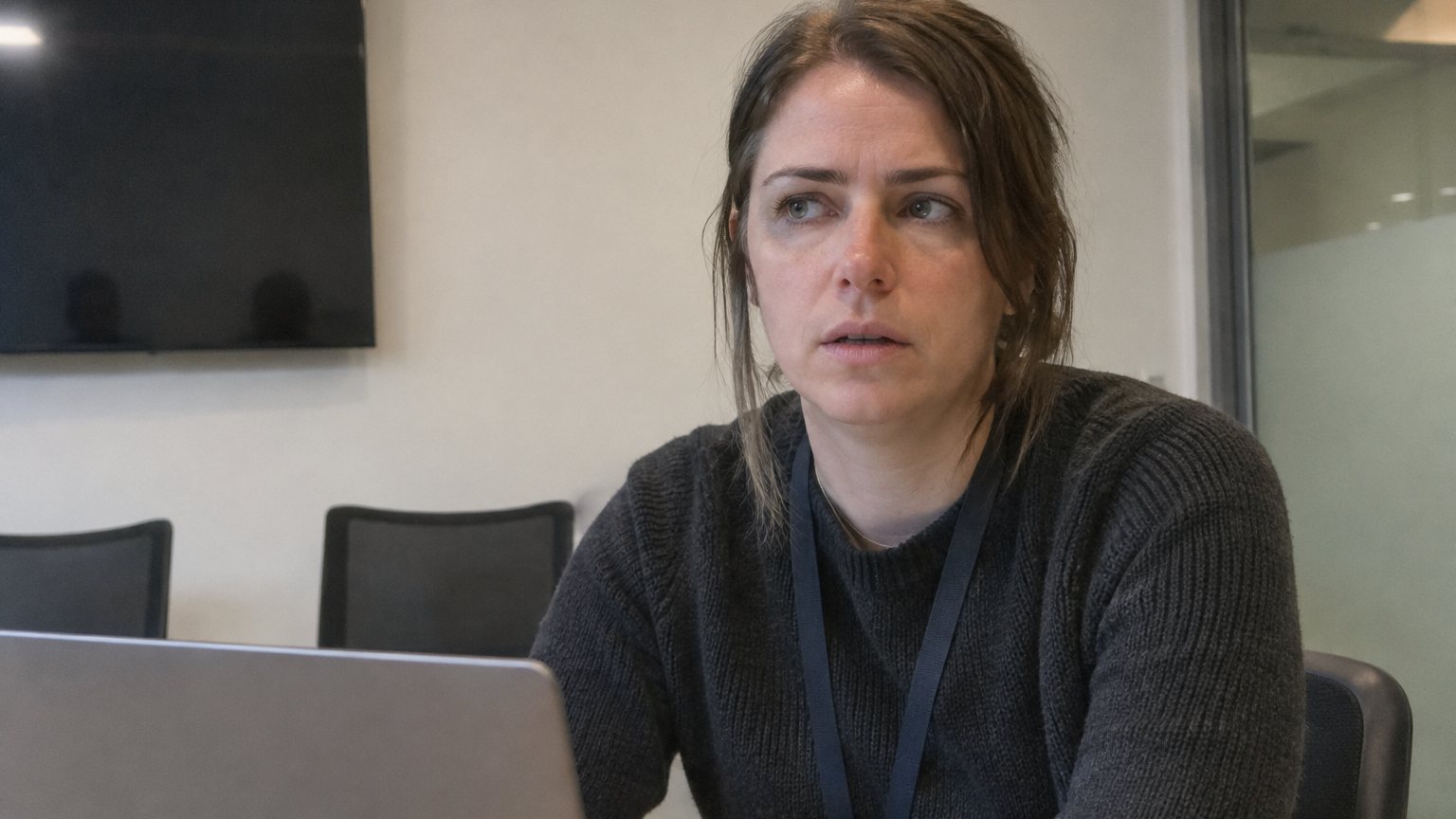
When people were asked for their single biggest speaking challenge, the largest answer was not sounding junior or lacking expertise. It was a blank moment. 38% said their mind goes blank or they forget what they wanted to say. Another 21% said they speak too fast when nervous, and 18% said they do not sound confident.
- Mind goes blank or forget what to say38%
- Speak too fast when nervous21%
- Don't sound confident18%
- Too many filler words11%
- Sound monotone or flat9%
- Don't know what to do with hands or face3%
Share of 1,851 AmberWillo onboarding answers. Respondents picked one biggest challenge.
That distinction matters. A blank, a rush, or a shaky tone can happen to someone who knows the material. But when it happens in front of people who can judge you, it can feel like a level problem. That is the loop we are holding open: among people who signed up to improve, how many actually put themselves in the advanced group?
Most people wanted a steadier work voice, not one perfect speech
The success-goal answers point in the same direction. Among 1,648 people who named a goal, 64% picked becoming a confident communicator overall. Another 18% wanted to feel calm before speaking. Only 9% were focused on nailing an upcoming presentation, and 4% wanted positive feedback from others.
So the comparison is bigger than one meeting. Many people are not asking whether one slide deck went well. They are asking whether their everyday speaking self sounds capable enough across updates, interviews, reviews, introductions and calls.
So how many called themselves advanced?
The answer is 104 people. Out of 1,851 speaking-improvement users, that is 6% who rated themselves advanced. The two largest groups were almost tied: 876 chose beginner and 871 chose intermediate.
- Beginner47%
- Intermediate47%
- Advanced6%
Share of 1,851 AmberWillo onboarding answers. Percentages are rounded.
In this sample, calling yourself advanced was the exception. Beginner and intermediate were nearly even, and together they made up the overwhelming majority of people who came in wanting to work on their speaking nerves.
What this means for you
If you feel behind before you speak at work, do not treat that feeling as proof that everyone else is operating at a higher level. Among people who came to improve, most did not call themselves advanced.
Use the benchmark to make the next step smaller. Pick one real work moment, such as a weekly update, a common interview answer, or the first minute of a review conversation. Practice it out loud once. Then score what actually happened. You do not need to sound like a finished speaker before you start. You need a specific next thing to improve.
Sources
- AmberWillo onboarding answers, n = 1,851, anonymised and aggregated, Dec 2025 to Oct 2026