Making small talk with strangers: are you more negative than most adults?
Before a meeting, interview or networking event, a benchmark from 3,881 U.S. adults can help you compare your reaction without assuming everyone hates the opener.
 By Maria Lee·

You know the moment before the real conversation starts. You are standing next to someone new before a meeting, waiting for an interview to begin, or hovering near a networking table with a drink in your hand. The topic is supposed to be light. The judgment can still feel real.
The useful question is not whether small talk can feel awkward. It can. The useful question is where your own reaction sits compared with other adults. A public YouGov result from 3,881 U.S. adults gives a benchmark. We will answer that comparison at the end. First, why this tiny exchange can feel bigger than the words themselves.
- Work presentations39%
- Social situations20%
- Job interviews12%
- Other11%
- School or academic9%
- Video content5%
- Sales or pitches5%
Share of 1,850 AmberWillo onboarding respondents who picked each main speaking situation, Dec. 2025 to Oct. 2026.
1 in 5 nervous speakers put social situations first
Among people who signed up to work on their speaking nerves, 20% picked social situations as their main pressure point. That was behind work presentations at 39%, and ahead of job interviews at 12%.
That matters because small talk sits between those worlds. It happens before the meeting starts, after the interview answer ends, during the elevator ride, at the reception desk and while the video call loads. It is not the official performance, but it can still feel like part of the impression.
YouGov asked 3,881 adults about a view, not a skill
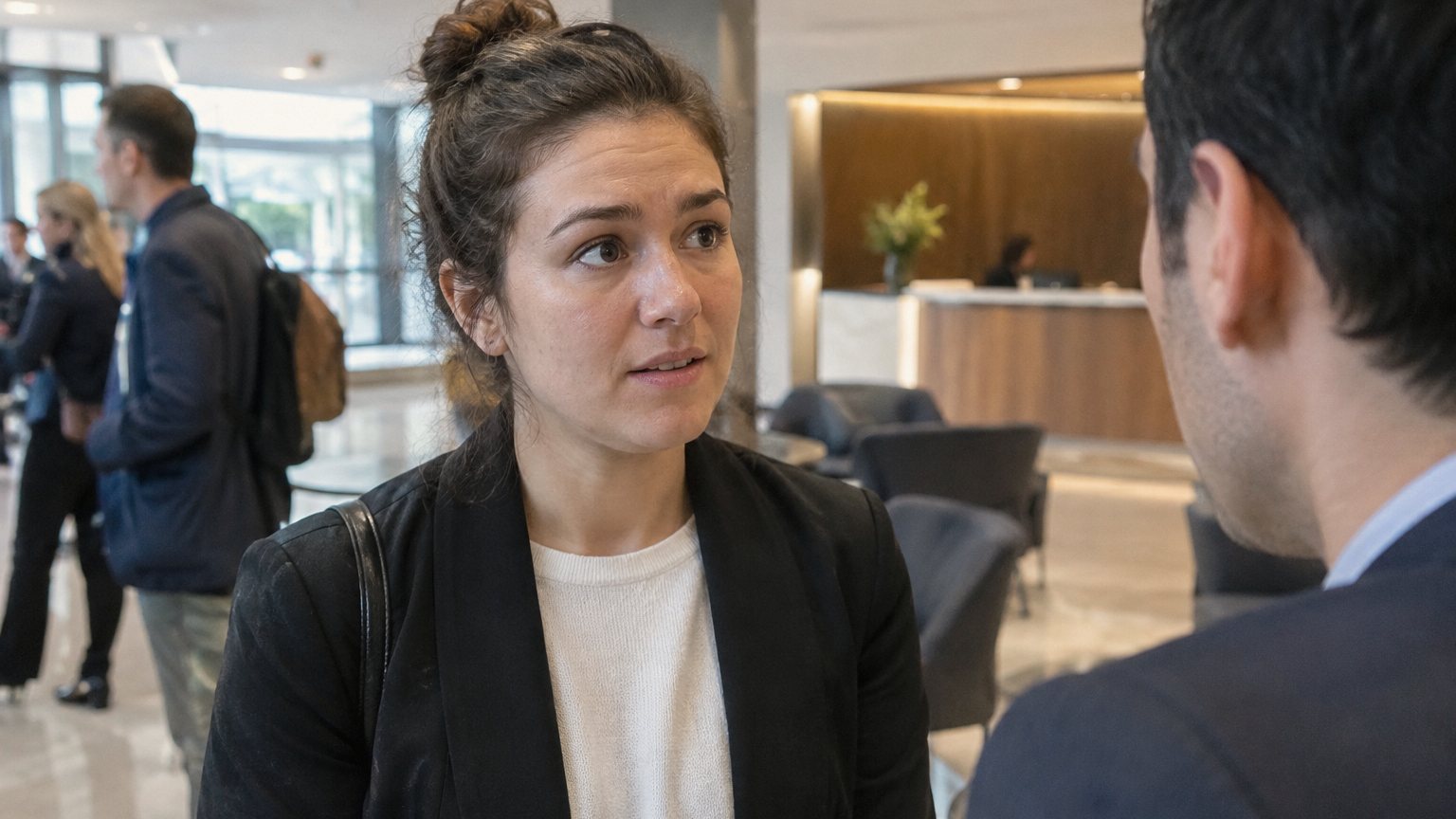
YouGov published the small-talk question on August 23, 2017. The survey was conducted that same day among 3,881 U.S. adults. It asked which view came closest to theirs when it comes to small talk.
That wording is important. The question did not ask whether people are polished at small talk. It did not ask whether they feel anxious before a networking event. It asked for a general view of small talk itself. That makes it useful as a baseline, but not as a measure of what anyone feels in a specific room.
It also keeps the comparison narrow. If you merely find the opener boring, that is different from actively wanting to avoid it. If you can tolerate a short opener as a normal bridge into a real conversation, that is different from feeling that the whole ritual is awkward. That is the comparison the headline is asking you to make.
So where do you stand?
If your honest answer is, “I dislike small talk and usually think it’s awkward,” then yes, you are in the more negative camp in this survey: 19% picked that view.
That does not mean everyone else loves small talk. The same YouGov item also included a larger neutral response: people who said they neither like nor dislike small talk and see it as a normal part of meeting someone new. In other words, the easy overstatement is wrong. The benchmark is not a room full of small-talk fans. It is a room where the bigger named group is neutral and practical about the opener.
What this means for you
If you dislike small talk, you are not alone. But you may be walking into the room assuming more rejection than this benchmark supports. Many people may not be excited by the opener, but they may still see it as a normal way into the real conversation.
Use small talk as a bridge, not a performance. One simple line is enough.
Ask about the shared situation. “Have you been to this event before?” or “How has your morning been?” gives the other person an easy way in.
Exit cleanly. If the exchange stalls, say, “Good talking with you. I’m going to grab a seat.” A graceful ending is part of the skill.
Say the first line out loud before you need it. The opener feels less strange when your mouth has already practiced it.
Sources
- YouGov daily results, small talk question, U.S. adults, August 23, 2017
- AmberWillo onboarding answers, n = 1,850 for main speaking situation, anonymized and aggregated