When people look at you in meetings and your mind blanks, 971 missed one next step
Among 1,850 nervous speakers who named what stops practice, the biggest answer was direction, not time. Another answer sat in the middle of the list.
 By Maria Lee·
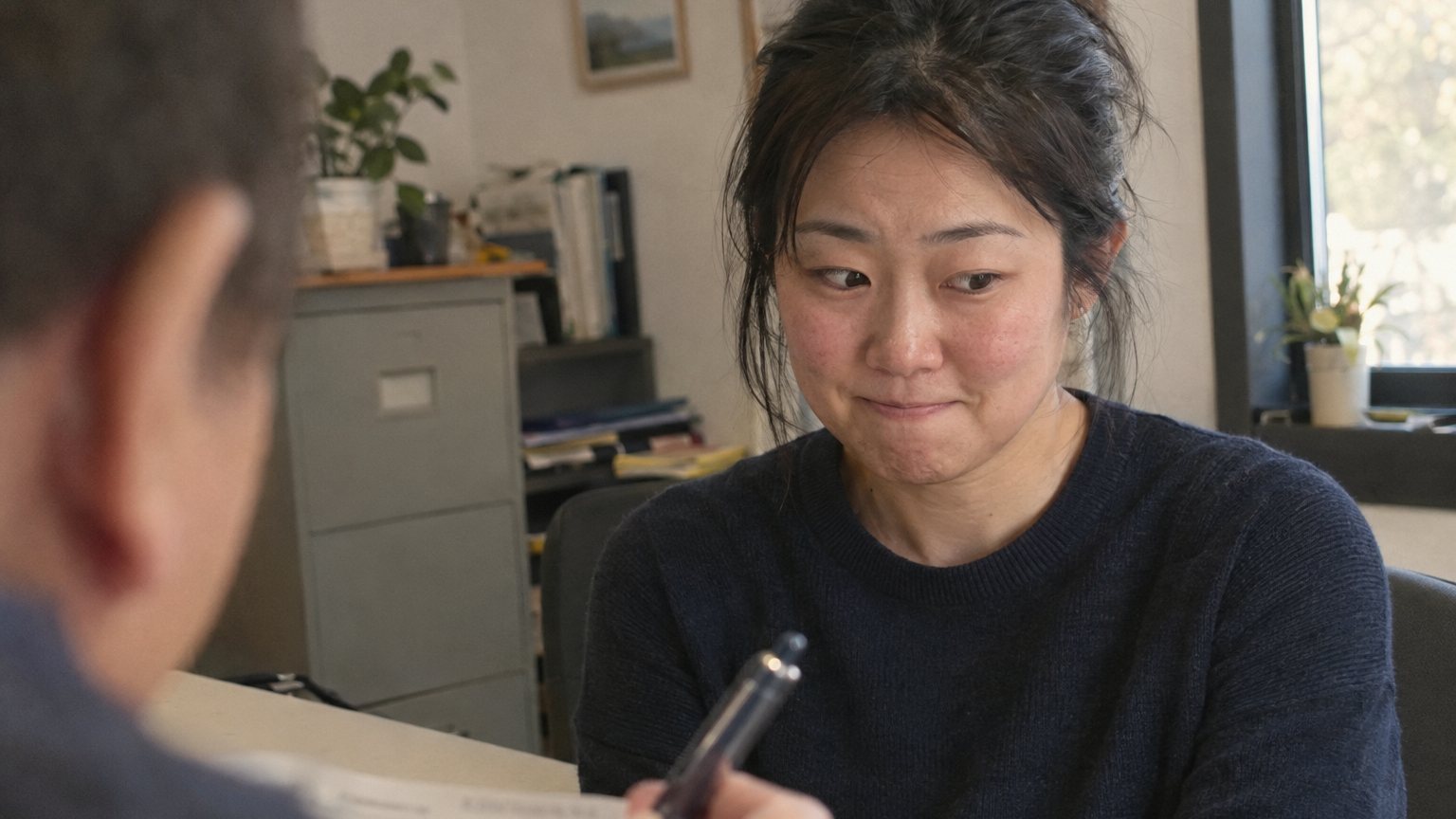
You know the moment. A meeting goes quiet, your manager looks at you, and the sentence you had ready disappears. Later, you tell yourself you should practice more, but the next question is harder: practice what? In AmberWillo onboarding answers, 971 of 1,850 nervous speakers who named a practice obstacle chose the same one: they do not know what to work on.
That is the gap many people feel after a blank. They know the moment went badly, but the problem is too blurry to turn into one short drill. Still, the most revealing answer in the obstacle list was not the biggest one. It was the more private blocker that many people do not name first. We will get to that near the end.
- I don't know what to work on971people
- No one to give me feedback344people
- I forget to practice129people
- Lack of time119people
Counts from 1,850 AmberWillo users who picked one practice obstacle, Dec 2025 to Oct 2026. One middle answer is held for the reveal near the end.
The blank is clear. The next drill is not
A blank in a meeting is easy to remember and hard to sort out. You may remember the pause, the heat in your face, or the look from someone across the table. You may not remember whether the issue was your first sentence, the order of your answer, your pace, your recovery line, or the way you ended.
That is why a broad obstacle can rise to the top. It is not that people refuse to practice. The larger problem is that many do not have a small target. If the target is only “be more confident,” the next practice round can feel like guessing.
- Work presentations712people
- Social situations376people
- Job interviews213people
- Other speaking situations207people
- School or academic talks171people
- Video content87people
- Sales or pitches84people
Counts from 1,850 AmberWillo users who picked one main speaking situation.
Work presentations were the largest setting in the data. That matters because work speaking often comes with a hidden scoreboard. You are not only answering the question. You are also trying to sound prepared, clear, and senior enough for the room. When your mind goes blank there, the moment can feel bigger than the words you lost.
Social situations came next, followed by job interviews. Those settings look different, but they share one thing: someone is waiting for words in real time. There is no edit button. A blank second feels public.
Direction beats willpower in the obstacle list

The obstacle list also makes one common excuse look smaller than expected. 119 people picked lack of time. That does not mean everyone has plenty of time. It only says that, in this group, time was not the obstacle most people chose. The bigger answers were about direction and feedback.
Feedback came second, with 344 people choosing it. That also fits the meeting version of the problem. You can reread notes alone, but you cannot easily tell whether your answer sounded clear to someone else. You may know you froze. You may not know what the listener heard before and after it happened. That brings us back to the answer in the middle of the list, the one we have not named yet.
The private blocker in the middle of the list
The answer was this: practicing alone feels awkward. 287 people out of the 1,850 who named an obstacle chose it.
That finding does not prove why people freeze in meetings. It also does not prove that anyone should practice alone. It says something narrower: among nervous speakers who already signed up to work on speaking, a meaningful group named the discomfort of doing a practice round by themselves as the thing that gets in the way.
| What stops them from practicing | People |
|---|---|
| I don't know what to work on | 971 |
| No one to give me feedback | 344 |
| Practicing alone feels awkward | 287 |
| I forget to practice | 129 |
| Lack of time | 119 |
Practice obstacles named by 1,850 nervous speakers.
That middle answer matters because it is easy to hide from yourself. “I don’t know what to work on” sounds practical. “I need feedback” sounds practical too. But saying a few sentences into a quiet room can feel strange, even when no one else is there. For people who blank when watched, the first rep can be uncomfortable before any audience enters the room.
What this means for you
If your mind goes blank when people look at you, do not make “practice more” the whole plan. Make the next rep small enough that you know when it is done.
Pick one target before you start. Try a clear first sentence, a slower opening, or a recovery line for when you lose your place.
Keep the round short. Thirty seconds is enough to practice producing words out loud instead of silently reviewing notes.
Make the strange feeling part of the rep. If speaking by yourself feels unnatural, start with the camera on and no audience. The goal is to make the act of starting less unfamiliar.
Ask for one kind of feedback. After a real meeting, ask one trusted person whether your main point was clear. Do not ask for a full review when one signal will do.
Sources
- AmberWillo onboarding answers, n = 1,851 overall; practice-obstacle responses n = 1,850; situation responses n = 1,850 (Dec 2025 to Oct 2026), anonymized and aggregated