Reddit asked why interviews make smart people go blank. 9,190 sessions point late
A Reddit post nails the interview problem: you know the material, then an immediate answer gets harder. In AmberWillo data, 885 users logged practice sessions.
 By Maria Lee·
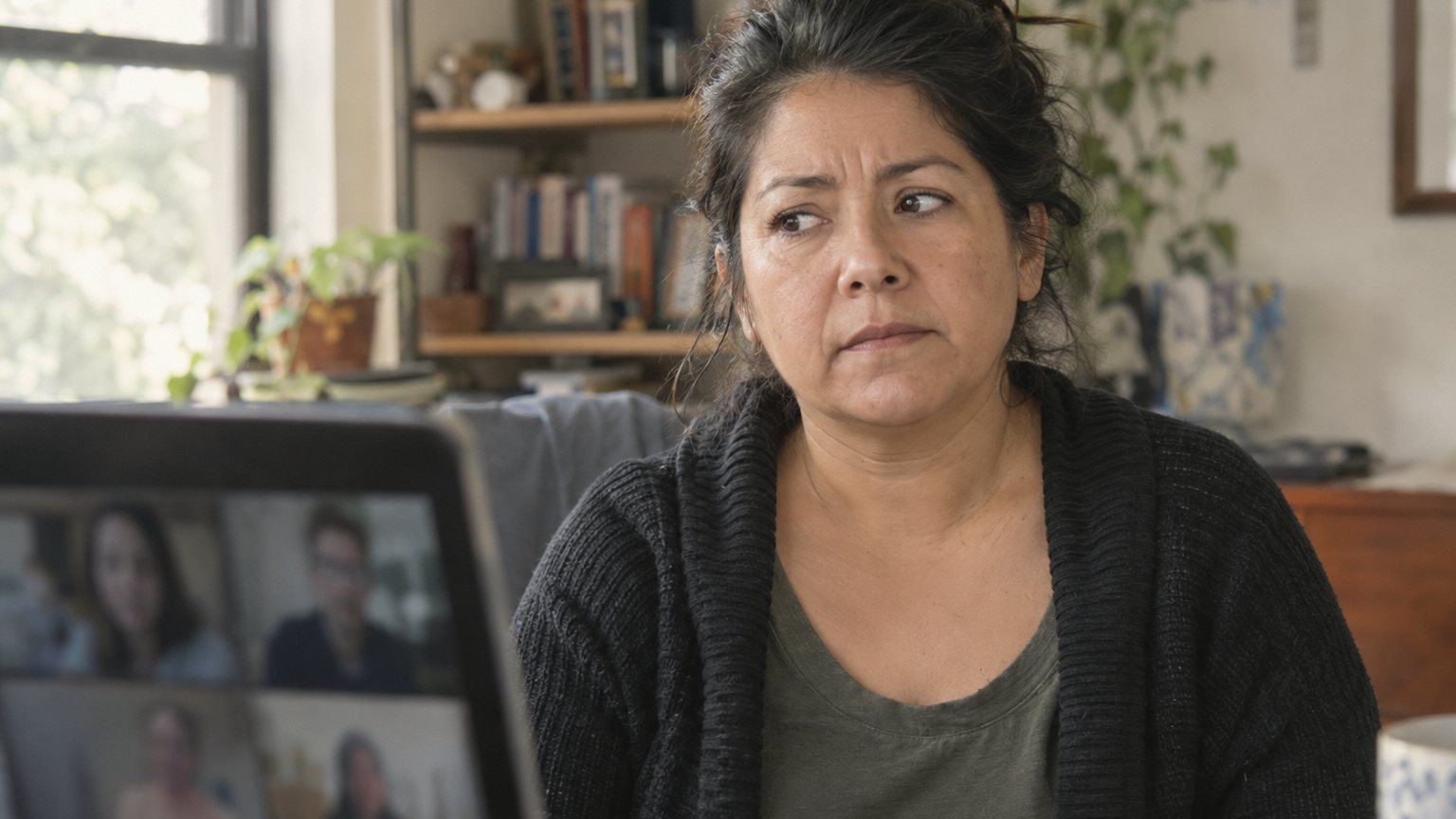
You know the answer in your head. You can explain it to yourself. Then an interviewer looks at you, asks for an immediate answer, and the clean version disappears. A recent Reddit post in r/PublicSpeaking put that feeling in plain language: "I almost always know the material so I don't think its a knowledge gap problem." The problem was what happened when someone was "in front of me evaluating me."
That is the interview gap many nervous speakers recognize. Across 9,190 AmberWillo practice sessions from 885 users, the data does not say that people lack knowledge, or that practice guarantees a different outcome. It does show where most practice activity sits, and it leaves a clue later in the record that we will get to at the end.
- Total practice sessions9190number unless noted
- Users with at least one practice session885number unless noted
- Median sessions per user4number unless noted
- Users who reached 10 or more sessions (%)28number unless noted
Aggregated AmberWillo practice activity pulled Oct. 8, 2026. Scores and usage are anonymous and aggregated.
The interview problem is not always knowledge
The Reddit post is not survey data. It is one public example of a common complaint among people who practice speaking: the material is there, but the answer does not arrive in an organized way when another person is waiting. The poster asked whether interview performance really reflects "someones ability to do the job," then described the moment an immediate answer is expected: "everything just suddenly gets harder."
That distinction matters because many professionals prepare for interviews by adding more content. They read the company page again. They review the job description again. They rehearse facts about their background silently. Those steps can help with content, but the Reddit post points to a different failure point: organizing and saying an answer while being evaluated.

AmberWillo's practice data cannot tell us what was happening inside each user's head. It can only count sessions and score recorded practice rounds in aggregate. Still, the pattern is useful because it separates two things that often get mixed together: starting practice and staying with it long enough to create later comparisons.
The first score is not the whole story
In the practice data, the median confidence score was 6.4 out of 10 at session 1, 6.7 out of 10 at session 3, and 6.8 out of 10 at session 10. These are median scores from AmberWillo's analysis of practice sessions. They are not a promise that any individual speaker will move in the same way.
- Session 16.4score out of 10
- Session 36.7score out of 10
- Session 106.8score out of 10
Scores are 0 to 10 from AmberWillo's AI analysis of completed practice sessions.
The difference is modest. That is important. Interview speaking is not usually fixed by one dramatic breakthrough. The more relevant question is whether a person gets enough out-loud attempts to compare early practice with later practice at all. That is where the clue we held back appears.
The later clue in the practice record
Here is the finding we held back: AmberWillo counted 3,884 completed daily challenges in the same practice data. That number matters because it is a separate practice unit from the total session count. It captures repeated, structured attempts rather than the idea of preparation in general.
The number does not prove that daily practice caused higher scores. It does not prove that a challenge format fixes interview nerves. It only says that, inside this group of nervous speakers who practiced on AmberWillo, thousands of completed structured rounds existed alongside the broader session data. For a person who feels fluent alone but scattered under evaluation, that is the part most likely to be missing from ordinary preparation: not more private knowing, but more recorded attempts to answer out loud.
- Completed daily challenges3884completed rounds
Completed daily challenges are aggregated across AmberWillo practice activity. They are shown as usage, not as proof of an outcome.
What this means for you
If you feel smarter in your head than you sound in interviews, do not assume the answer is to memorize more. Treat the interview answer as a live skill. You still need content, but you also need reps where you speak before the sentence feels perfect.
Try this before your next interview: pick one common question, turn on a camera, and answer for 30 seconds without restarting. Then listen for structure, not perfection. Did you answer the question first? Did you give one example? Did you stop cleanly? Repeat with a different question. The point is to practice the evaluated moment, not to judge your intelligence from one awkward answer.
Sources
- Reddit r/PublicSpeaking post about feeling smarter in your head than in interviews
- AmberWillo practice activity, n = 885 users and 9,190 sessions, anonymized and aggregated, pulled Oct. 8, 2026