California workers can soon ask how AI affected a raise, promotion or job
A raise, promotion or hiring no can make the next HR question feel risky. California’s AI-decision rule gives that question sharper wording.
 By Maria Lee·

By January 1, 2027, California workers get 3 ADMT rights when automated tools affect significant employment decisions. The California Privacy Protection Agency says businesses using Automated Decisionmaking Technology, or ADMT, for significant decisions must meet notice, opt-out and access requirements by that date. But the hard part may still be saying the first sentence to HR after a raise, promotion or job decision goes against you.
January 1, 2027 is the deadline businesses must meet
The CPPA FAQ says businesses must comply with ADMT-specific requirements by January 1, 2027. It describes these rights for significant decisions about a person, including decisions related to employment, housing, financial services, education and healthcare.
The timeline sits inside a longer California privacy law path. The California Consumer Privacy Act of 2018 gave consumers rights over personal information. California voters approved Proposition 24 in 2020, and the CPRA amendments to the CCPA went into effect on January 1, 2023.
The first words to HR may still feel like a challenge
After January 1, 2027, the legal wording can be short: “Was automated decisionmaking technology used in this employment decision?” The CPPA’s listed rights give that question a frame: notice, opt-out where applicable and access to meaningful information.
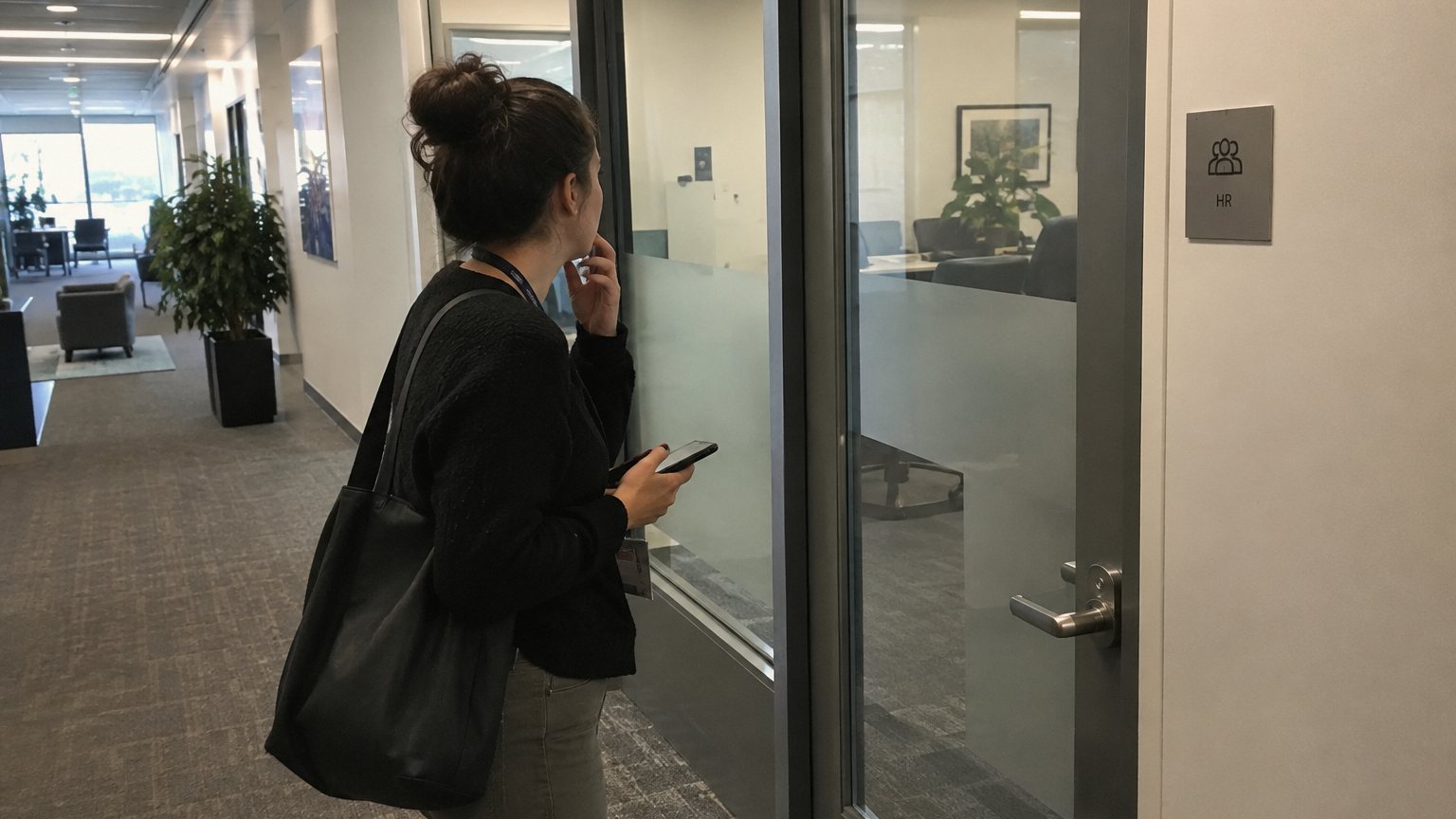
Saying it out loud can still feel exposed after a pay or promotion decision. If your voice tightens when you need to ask a direct question, the same nerves behind public speaking apprehension can show up in a private HR conversation across a desk.
Employment is named beside housing and healthcare
The CPPA says the ADMT rights apply when a business uses the technology to make “significant decisions” about a person. Its examples include decisions related to employment, housing, financial services, education and healthcare, with the compliance date set at January 1, 2027.
That list puts a workplace outcome in the same official category as housing and healthcare. For a California worker, the practical question is narrower than a broad complaint: ask whether ADMT was used in the employment decision and what rights apply.
What can a worker ask for?
The FAQ lists the right to receive notice that a business uses ADMT. It also lists the ability to opt out of the business’s use of ADMT, “where applicable,” and the ability to request meaningful information about how the ADMT functioned and how it affected the person.
Take a California employee who is told after January 1, 2027 that they did not get a promotion. If ADMT was used for that significant employment decision, the first ask can stay factual: what notice applies, whether opt-out applies and what meaningful information can be provided.
Every listed right workers can turn into a question
The CPPA’s January 1, 2027 ADMT language can be turned into a short script without adding claims the agency does not make. The wording below sticks to the agency’s listed rights and the employment example in its FAQ.
| Listed right | What the CPPA says | Workplace question it supports |
|---|---|---|
| Notice | Receive notice that the business uses ADMT when it is used for significant decisions. | Was automated decisionmaking used in this employment decision? |
| Opt out, where applicable | Have the ability to opt out of the business’s use of ADMT, where applicable. | Does opt-out apply to this tool or decision? |
| Meaningful information | Request meaningful information about how the ADMT functioned and how it affected you. | How did the tool function, and how did it affect my outcome? |
California ADMT rights listed by the California Privacy Protection Agency
What this means for you
If you work in California and a raise, promotion or hiring decision goes against you after January 1, 2027, start with the source language. Ask: “Was automated decisionmaking technology used to make this employment decision?”
Then keep the follow-up close to the CPPA wording: notice, opt-out where applicable and meaningful information. Short wording helps when your voice feels tight. You are not trying to win the whole argument in the first sentence. You are asking whether ADMT was involved and how it affected you.
Sources