Job seekers recording introductions: is your own-voice cringe unusual?
If replaying a voicemail, video intro or recorded update makes you want a do-over, the national benchmark is closer than you may think.
 By Maria Lee·
In 2019, 43% of U.S. adults were uncomfortable hearing their recorded voice, from 27% somewhat and 16% very. YouGov's Dec. 18, 2019 daily survey reported those two uncomfortable answers among 4,058 U.S. adults. But 23% were very comfortable and 25% were somewhat comfortable, so job seekers replaying a video intro, voicemail or recorded update are in a split room, not an odd corner.
- Comfortable48%
- Uncomfortable43%
- Don't know9%
YouGov reported 23% very comfortable, 25% somewhat comfortable, 27% somewhat uncomfortable, 16% very uncomfortable and 9% don't know. AmberWillo calculated the combined comfortable and uncomfortable groups.
Somewhat uncomfortable was the largest answer at 27%
The biggest single answer in the 2019 YouGov result was not strong confidence or strong discomfort. It was the 27% who said listening to a recording of their own voice was somewhat uncomfortable.
The stronger reaction was smaller but still common: 16% said very uncomfortable. On the other side, 23% said very comfortable and 25% said somewhat comfortable. Another 9% said they did not know.
Playback turns a job pitch into a voice check
YouGov's wording matters for a recorded introduction because it asks about listening to a recording of your own voice. That is exactly the moment after you hit play and hear the voice the employer, recruiter or hiring manager would hear next.
A recorded intro changes the speaking task. You are not only choosing what to say. You hear pace, tone, pauses and confidence as if someone else said the words. If you want a cleaner checklist, the basics of a public speaking voice give you concrete things to listen for: volume, pace and emphasis.
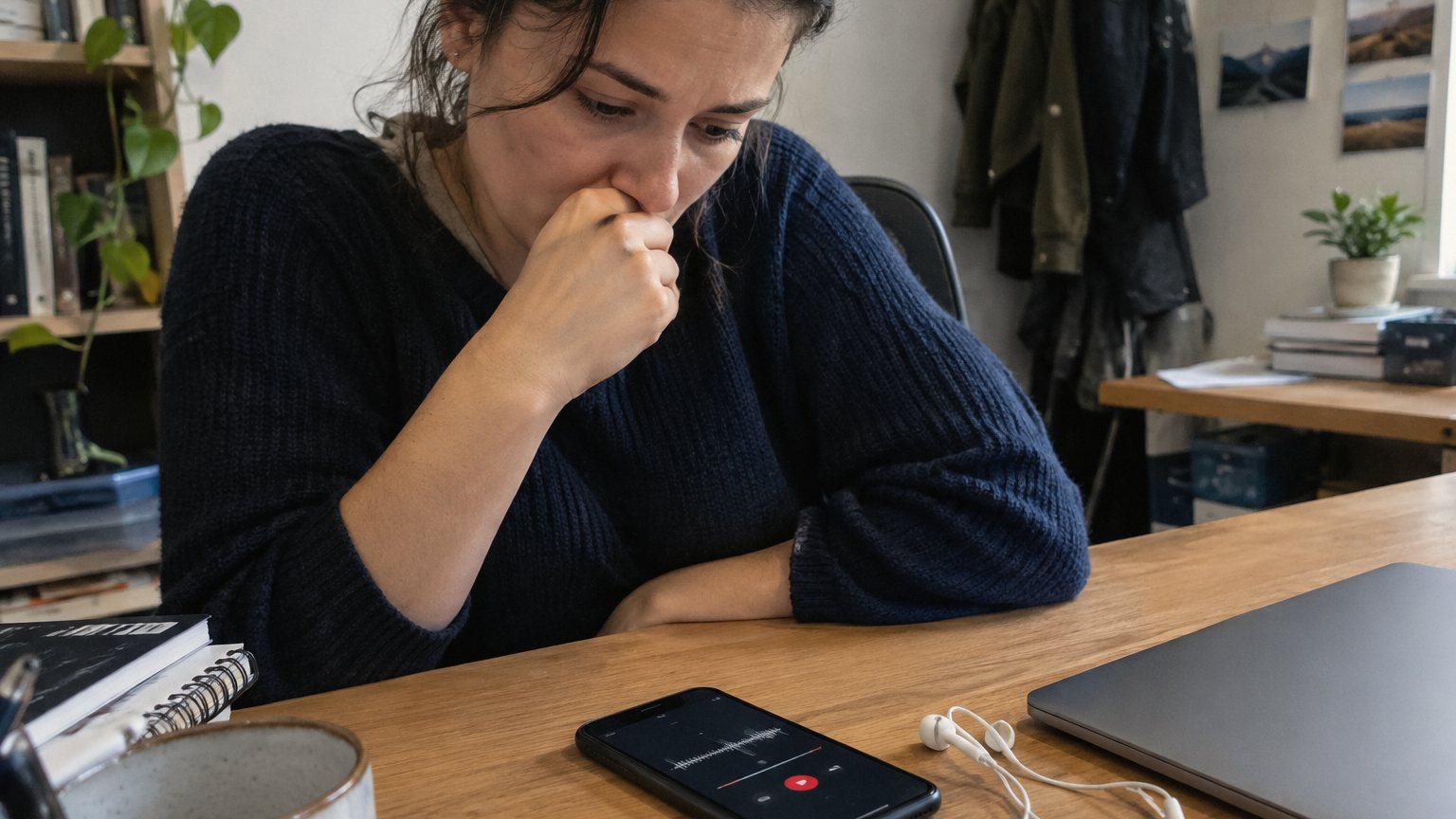
Why do some replays feel mild and others harsh?
A later YouGov awkwardness survey shows the reaction is spread across a wider scale. In September 2022, YouGov asked 1,000 US Adult Citizens to rate scenarios from 0, not awkward at all, to 10, extremely awkward.
For listening to a recording of your own voice, the total distribution ran from 20% at 0 to 14% at 10. The middle was crowded too: 10% chose 5, 8% chose 6 and 9% chose 8.
The extreme cringe group was smaller than the zero-awkward group
The 2022 awkwardness table puts the replay feeling into sharper shape. The largest point on the scale was 0, at 20%. The next largest was 10, at 14%. Those two ends describe very different adults hearing the same kind of playback.
The remaining scale did not collapse into one middle answer. YouGov reported 5% at 1, 6% at 2, 6% at 3, 6% at 4, 10% at 5, 8% at 6, 6% at 7, 9% at 8 and 6% at 9.
Every recorded-voice answer YouGov reported
The full 2019 response list shows why the overall answer is close. The uncomfortable side is built from 2 categories, and the comfortable side is built from 2 categories, with a separate 9% who did not choose either.
| Response | Share of U.S. adults |
|---|---|
| Very comfortable | 23% |
| Somewhat comfortable | 25% |
| Somewhat uncomfortable | 27% |
| Very uncomfortable | 16% |
| Don't know | 9% |
Comfort or discomfort listening to a recording of your own voice, YouGov, Dec. 18, 2019
The table also shows why the feeling can be mild but persistent. The biggest group, at 27%, was somewhat uncomfortable, not very uncomfortable. For many people, playback is not panic. It is enough friction to make them hesitate.
What this means for you
If your first playback makes you wince, do not treat that as proof the recording is bad. Compare the file against a short checklist: are your words clear, is the pace steady, and does the opening sentence say what the listener needs?
Record one version for content and one version for sound. In the first pass, fix missing words. In the second, listen only for pace, volume and one confident ending. If you keep judging the whole of you from one playback, the redo loop gets louder than the message.
Sources