After parents help with résumés, how many Gen Z interviews are still solo?
If a parent helped polish the application, the live interview is where the candidate still has to speak for themselves.
 By Maria Lee·

80% of Gen Z workers had no parent involvement during interviews in January 2026, after 44% got résumé/CV help. Zety, in a release carried by PR Newswire, also said 21% had a parent directly contact a potential employer or recruiter. But the live interview still looked different for most 18- to 27-year-old workers: support could appear on the application, then disappear when the candidate had to speak.
At 44%, résumé help is the widest parent role
Zety said its 2026 survey covered 1,001 Gen Z workers in the U.S. The most common parent role named in the release was the document stage: 44% had parents help write or edit a résumé or CV.
That kind of help can stay partly invisible. A cleaner bullet, a stronger verb or a tighter summary may improve the page before anyone meets the candidate. The interview is different: the written 44% résumé help has to become spoken answers.
Edited résumés become spoken answers
A job interview turns polished writing into a live conversation. Someone asks, you answer, and your voice carries the proof. If you need to rehearse without memorizing a script, short speaking prompts can train the same on-the-spot answer muscle.
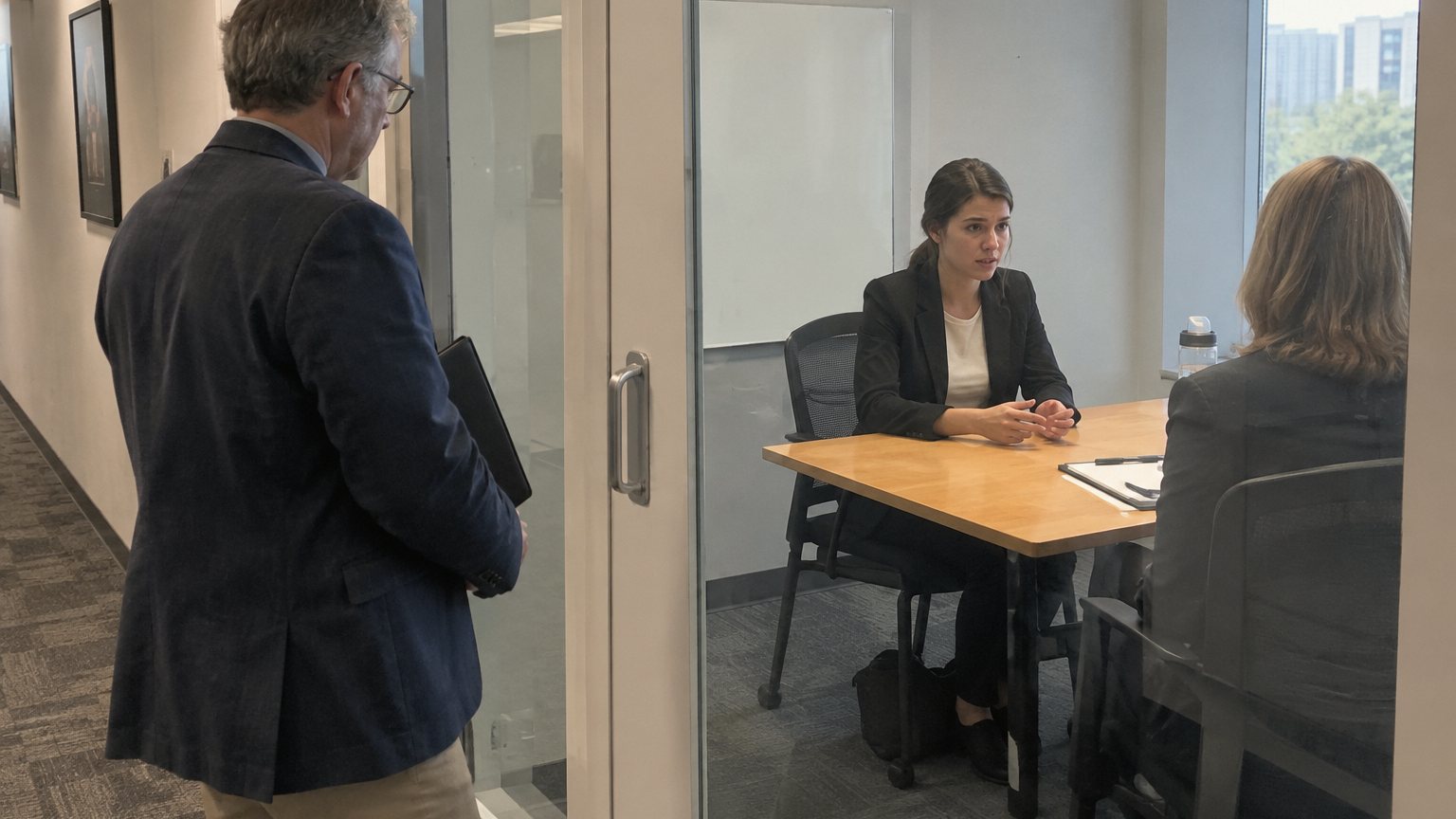
The Zety release drew a clear line at the interview stage. It reported that 5% had a parent join a virtual interview, 15% had one join an in-person interview, and 80% had no involvement during interviews.
The sample was 1,001 employed Gen Z workers
The release says the findings were based on a nationally representative survey conducted by Zety using Pollfish on January 26, 2026. It collected responses from 1,001 Gen Z workers.
Those respondents were screened to be U.S. residents, actively employed and ages 18 to 27. That makes the 80% interview benchmark a snapshot of working Gen Z adults, not a survey of all applicants, students or recent graduates.
Why does the parent role shrink?
Zety’s release used a plain warning for employers and candidates: “Parental involvement doesn’t always stop once an application is submitted.” The interview numbers show where that involvement becomes most visible, because a parent either appears in the room or does not.
Take an 18- to 27-year-old candidate whose parent helped edit a résumé and contacted a recruiter. Both roles are reported in the Zety release, at 44% and 21%. The sharper signal comes later, when the candidate has to answer questions directly.
A parent can improve wording before the interview. A parent can also contact a potential employer before the candidate is heard. But when a parent joins a virtual interview, reported by 5%, or an in-person interview, reported by 15%, the support is no longer backstage.
Parent help was most visible before the live conversation
Put the application stage and the interview stage side by side, and the pattern is clear. Parent involvement was reported most often before live questions began. It thinned out when the candidate had to speak in real time.
| Job-search moment | Share of Gen Z workers |
|---|---|
| Parent helped write or edit résumé/CV | 44% |
| Parent directly contacted a potential employer or recruiter | 21% |
| Parent joined a virtual interview | 5% |
| Parent joined an in-person interview | 15% |
| No parent involvement during interviews | 80% |
Parent involvement reported by Gen Z workers in the Zety survey
The table explains why the loudest stories can distort the benchmark. A parent joining a virtual interview was reported by 5%. A parent joining an in-person interview was reported by 15%. The no-involvement interview figure was 80%.
For a nervous candidate, that is the useful comparison. Visible parent involvement exists, but the reported norm in this 2026 Gen Z worker sample was still an interview where the candidate’s answer had to stand on its own.
What this means for you
If a parent helped with your résumé, separate that help from the interview. Know which examples are truly yours. Practice saying them out loud until you can explain the result, the decision and the mistake without looking for rescue.
If an employer asks about your application, keep the ownership clear: “I got feedback on the document, but the project was mine.” Then give a specific example in your own voice. The benchmark says most Gen Z interviews in the survey had no parent involvement.
Sources